Infotainment 3.0: Why CES 2026 Signals a New Intelligence Layer Across Devices, Networks and Experiences
Infotainment 3.0: Why CES 2026 Signals a New Intelligence Layer Across Devices, Networks and Experiences
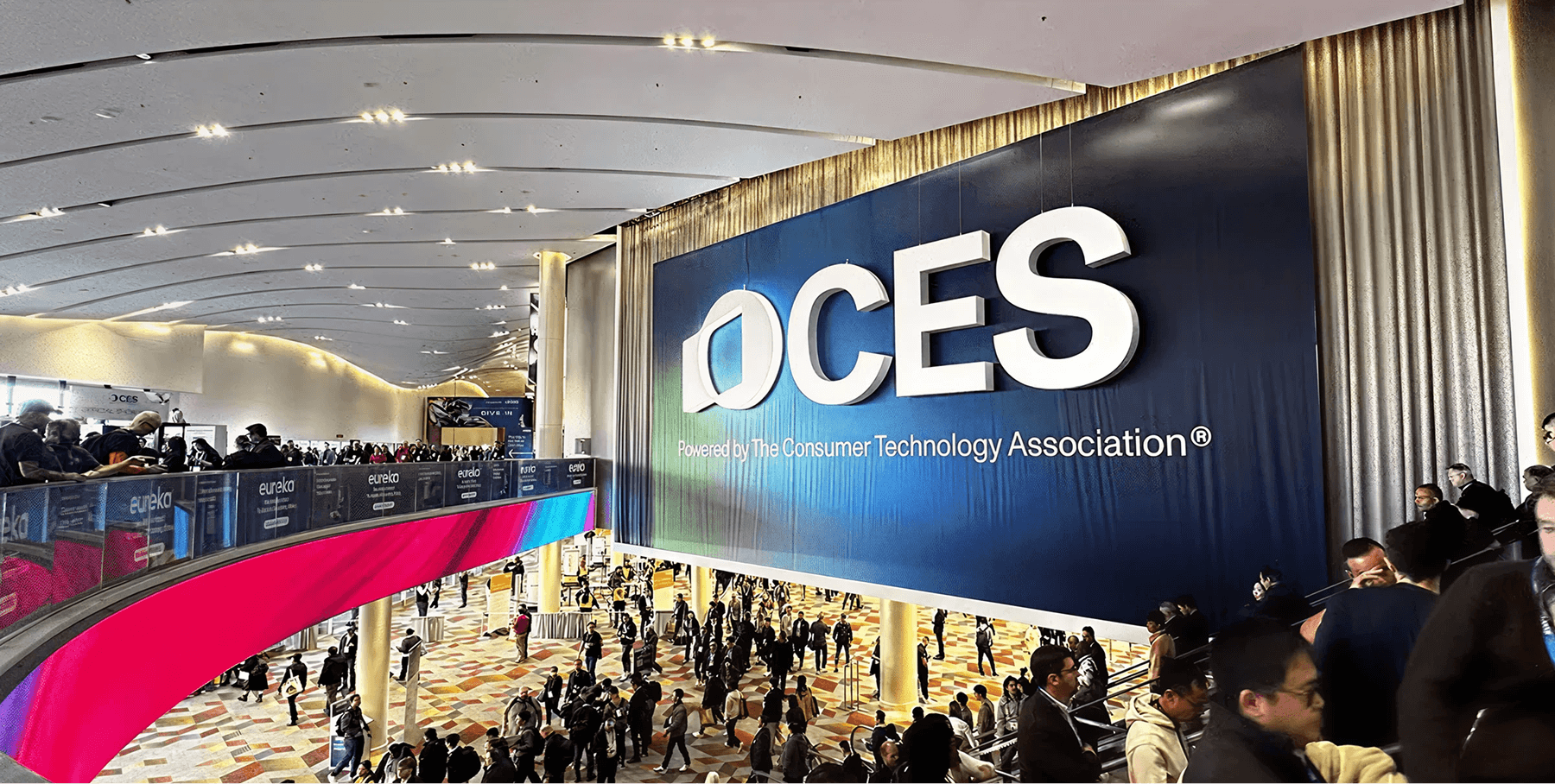
With CES 2026 approaching, we can fully expect a new generation of polished demos, brighter screens, smarter assistants, upgraded cloud platforms and yet another wave of feature-rich devices ready to capture attention.
Those elements matter. They show progress. But they are only the visible part of a much larger transformation taking place across a much broader canvas than the centre console of a car. Something far more structural is taking shape underneath that does not fit neatly into a keynote or a polished expo booth.
Infotainment is moving beyond the car and expanding from a word defined by “content and UI” to a word defined by “intelligence across devices, screens, networks, systems and experiences”.
For Mavsotech, infotainment has never referred only to automotive IVE. In fact, for us it describes the entire digital environment in which people and organizations interact across service provider networks, screens, audio platforms, embedded devices, supply-chain systems, home connectivity, customer support and software-defined vehicles. Every one of these domains now relies on intelligence, context and orchestration to deliver coherent experiences. The past year has made that clearer than ever.
Across operators, consumer electronics, auto manufacturers and enterprise software teams, the conversations are converging on the same challenge. The real barrier is no longer the ambition to innovate or the desire to modernise. It is the fragmentation of intelligence across systems that were built independently and have continued to evolve independently.
Infotainment 3.0 is emerging because fragmentation is no longer sustainable.
What defines this new era is not a single device or a single assistant. It is the recognition that experiences are shaped by the alignment of many systems working together. A more capable display in the car does not mean much if the content pipeline behind it remains static. A new home voice assistant is less useful if it cannot coordinate with the operator’s network intelligence. A support workflow powered by AI cannot achieve its potential if it cannot draw on telemetry from devices or diagnostics from field systems.
Everything is connected now, yet the intelligence behind these experiences is not.
This is why orchestration is becoming the central story across industries. When people casually refer to “AI”, the reference often lands on the interface layer. But intelligence is becoming the core design principle across infrastructure, cloud, firmware, operations and service delivery. It is shaping how content is recommended, how customer issues are resolved, how devices heal themselves, how networks adjust in real time, and how data is interpreted across entire supply chains.
The shift to orchestration is the recognition that these systems cannot remain isolated if they are meant to act intelligently.
Across multiple segments, the same pressures are forming. Service providers are modernising provisioning and support systems that were never intended to operate with real-time or predictive intelligence. Automotive teams are building AI stacks from scratch, duplicating costs and timelines. Consumer device manufacturers are struggling to keep firmware, diagnostics and cloud services synchronized. Content providers face inconsistent experiences across screens and platforms.
Each domain is innovating, but rarely in a way that enhances the whole.
Software-defined vehicles have accelerated this realisation, but they are only one expression of a broader trend. The SDV movement shows what happens when software, data and intelligence become continuous and dynamic rather than static and siloed. The same pattern is unfolding in operator networks, in in-home connected devices, in customer support systems and in enterprise workflows.
When software becomes dynamic, intelligence must become orchestrated.
This is why Infotainment 3.0 is not an automotive idea. It is an ecosystem idea. It describes an environment where devices, data sources, cloud systems, embedded intelligence, operational pipelines and user experiences participate in one adaptive network.
At industry events this year, the most meaningful progress was not what appeared on the main stage. It happened in the quieter meetings, where leaders agreed that the future will be built on intelligence that spans domains rather than sitting inside them. The need for coordination has become too large to be ignored.
As CES 2026 approaches, the excitement will naturally centre on the visible expressions of innovation, and rightly so. They inspire customers and push expectations higher. But the real transformation will be happening in the architecture discussions that shape how intelligence flows beneath those surfaces.
Infotainment 3.0 will not be defined by a new display or a new device category. It will be defined by a shared understanding that value emerges when intelligence, data and operations can work as one.
This is the direction Mavsotech has been building toward. And as we enter the new year, it is becoming increasingly clear that companies across connectivity, automotive, audio, content and device ecosystems are converging on the same conclusion. The organisations that thrive will be those who invest in orchestration, not as a technical enhancement but as the foundation for the next decade of experiences.
The future of infotainment, in its true multi-industry sense, will be shaped by how well we align the intelligence behind the experiences people rely on every day. Not by how impressive those experiences look in isolation, but by how seamlessly they work when everything behind them finally operates together.
If you are attending CES2026 and wish to keep this conversation going, please contact me to book a meeting. I'd be delighted to hear your thoughts in person.
Join our Team - Even if you don’t see the perfect role!
Stay Connected